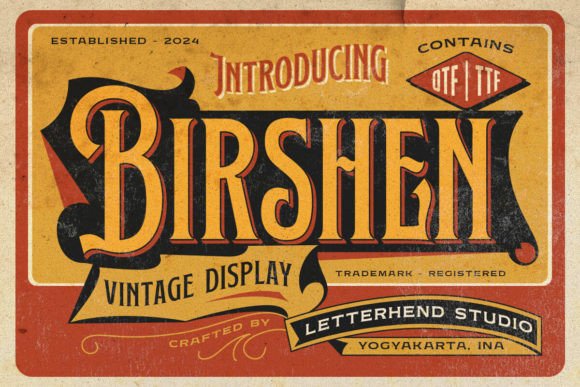
Birshen: Reviving the Soul of 60s and 70s Signage in Modern Design
In an era where digital interfaces often prioritize sterile minimalism, there is a growing hunger for typography that carries weight, history, and character. Birshen emerges as a direct response to this cultural shift, offering a vintage serif with classic looks inspired by the vibrant signages of the 1960s and 1970s. It is not merely a font; it is a design tool that bridges the gap between nostalgic warmth and contemporary professionalism. For designers, entrepreneurs, and creatives looking to infuse their projects with authenticity, Birshen provides a distinct voice that cuts through the noise of modern visual clutter.
The resurgence of retro aesthetics is more than a fleeting trend; it represents a fundamental change in how audiences perceive brand identity. As consumers become increasingly skeptical of overly polished, algorithm-generated content, they gravitate toward designs that feel human, tactile, and grounded in tradition. Birshen captures this sentiment perfectly. Its letterforms echo the hand-painted signs of mid-century cafes, theaters, and boutiques, evoking a sense of craftsmanship that resonates deeply with today's discerning audience.
The Anatomy of a Vintage Serif
To understand why Birshen has gained traction, one must look at its structural DNA. Unlike the rigid geometric sans-serifs that dominated the tech boom of the early 2000s, Birshen embraces the organic irregularities found in historical typefaces. The font features high contrast strokes, elegant serifs, and a slightly condensed width that mimics the constraints of physical signage from the 60s and 70s. These characteristics make it instantly recognizable while remaining highly legible across various mediums.
The inspiration drawn from vintage signages is deliberate. During the mid-20th century, typography was often dictated by the limitations of the medium—whether it was neon tubing, painted wood, or embossed metal. These constraints forced designers to create bold, expressive shapes that communicated clearly from a distance. Birshen translates these historical necessities into a digital format, retaining the spirit of those eras without sacrificing modern usability. This makes it an ideal choice for logos that need to stand out on both a mobile screen and a storefront window.
Why Retro Typography Matters Now
The current design landscape is defined by a paradox: technology is advancing rapidly, yet people are seeking comfort in the past. This phenomenon, often called "retro-futurism" or simply nostalgia marketing, drives the popularity of fonts like Birshen. Brands are realizing that a connection to the past can build trust. A logo designed with a vintage serif suggests longevity, stability, and a commitment to quality—attributes that are highly valued in sectors ranging from fashion to publishing.
Furthermore, the evolution of user expectations plays a significant role. Modern audiences are visually literate; they can spot generic templates from a mile away. They crave uniqueness. By utilizing a typeface like Birshen, creators signal that they have made a thoughtful, curated choice rather than settling for the default options. This attention to detail enhances the perceived value of the product or service being presented.
Practical Applications Across Industries
The versatility of Birshen extends far beyond simple headlines. While it is perfectly made to be applied especially in logo design, its utility spans a wide array of formal and creative forms. The font's ability to convey elegance and authority makes it suitable for diverse industries, each leveraging its unique strengths in different ways.
Brand Identity and Logos
For business owners and marketers, the logo is the cornerstone of brand identity. Birshen offers a distinctive silhouette that helps a brand establish a memorable presence. Whether for a boutique coffee shop aiming for a hipster aesthetic or a law firm desiring a touch of old-world prestige, the font adapts gracefully. Its strong vertical lines and classic curves ensure that the logo remains impactful even when scaled down for social media avatars or embossed on business cards.
Publishing and Editorial Design
In the world of print and digital publishing, Birshen finds a natural home in magazines, books, and novels. Editors and graphic designers often struggle to find a typeface that balances readability with stylistic flair for chapter headings or feature articles. Birshen solves this by providing a sophisticated look that commands attention without overwhelming the body text. It is particularly effective in lifestyle magazines, literary journals, and art books where the visual presentation is as important as the content itself.
Fashion, Beauty, and Packaging
The fashion and makeup industries rely heavily on packaging to communicate luxury and style. Here, Birshen excels in creating labels and packaging designs that feel premium and timeless. Imagine a perfume bottle or a cosmetic jar adorned with a label set in Birshen; the result is an immediate association with heritage and quality. Similarly, clothing brands use the font on hangtags and woven labels to reinforce a narrative of artisanal production and enduring style.
Celebrations and Stationery
On a personal level, Birshen is a favorite for greeting wedding cards, invitations, and stationery. Couples planning weddings often seek themes that blend romance with sophistication. The vintage serif style of Birshen lends a romantic, storybook quality to invitations, setting the tone for the event before the guest even arrives. It transforms a standard invitation into a keepsake, reflecting the care and intention put into the celebration.
Integrating Birshen into Modern Workflows
Adopting a vintage-inspired font like Birshen does not mean abandoning modern workflows. In fact, it complements them. Today's design tools allow for seamless integration of such typefaces into complex layouts. Designers can pair Birshen with clean, modern sans-serifs to create dynamic contrasts that guide the reader's eye. This pairing strategy is common in advertising purposes, where the headline needs to grab attention (using Birshen) while the body copy remains easy to scan.
For freelancers and agencies, using Birshen can streamline the creative process. Because the font is so versatile, it reduces the need to search for multiple typefaces for different project components. A single font family can handle everything from the main logo to the fine print on a label, ensuring visual consistency throughout the brand ecosystem. This efficiency is crucial in fast-paced markets where turnaround times are short.
Considerations for Digital Implementation
While Birshen has roots in physical signage, its application in digital spaces requires careful consideration. On screens, legibility is paramount. Designers should ensure adequate spacing and size when using Birshen for web headers or app interfaces. However, for branding elements like logos and icons, the font performs exceptionally well, maintaining its character even at smaller resolutions. When used correctly, it adds a layer of texture and depth to flat digital designs, making them feel more tangible.
Strategic Recommendations for Creators
For professionals looking to leverage Birshen effectively, a few strategic recommendations can maximize its impact. First, do not overuse it. Like any strong typeface, Birshen works best as an accent or a primary display font rather than for long blocks of body text. Second, consider the context of your audience. If your target demographic values tradition and craftsmanship, Birshen will resonate immediately. If you are targeting a hyper-modern, tech-focused audience, use it sparingly to create intrigue.
Additionally, experiment with color and texture. The vintage nature of Birshen pairs beautifully with muted earth tones, deep greens, and rich burgundies, as well as distressed textures that mimic aged paper or worn metal. These combinations enhance the nostalgic feel and reinforce the message of authenticity.
Ultimately, the rise of Birshen reflects a broader desire for meaning in design. It is a testament to the idea that good design is not just about what is new, but about what endures. By choosing a font that honors the past while serving the present, creators can build brands and stories that connect on a deeper, more emotional level. Whether for a novel, a fashion label, or a wedding invitation, Birshen offers a timeless solution for those who dare to embrace the classic.