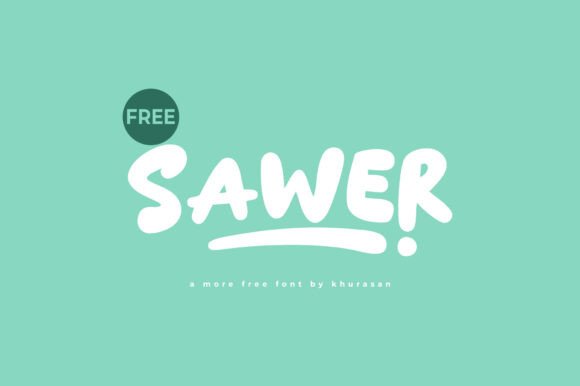
Sawer: A Modern Display Font for Bold Designs
In the crowded landscape of digital and print media, the right typeface can be the difference between a design that gets noticed and one that fades into the background. Sawer emerges as a compelling solution for designers seeking a balance between modern aesthetics and playful charm. It is not merely a font; it is a visual tool designed to inject personality into posters, logos, magazines, and book covers. For creators aged 20 to 50 who value both professionalism and approachability, Sawer offers a versatile foundation for projects that need to stand out without shouting.
Understanding the Character of Sawer
At its core, Sawer is a display font characterized by rounded edges, generous spacing, and a distinctively friendly geometry. Unlike rigid sans-serifs or overly ornate scripts, Sawer occupies a unique middle ground. It feels contemporary yet retains a warmth that resonates with human connection. This "cute" quality is intentional, derived from soft terminals and open counters that make the letters feel inviting rather than imposing.
What makes Sawer particularly useful is its legibility at larger sizes. While many decorative fonts struggle when scaled up for banners or headlines, Sawer maintains structural integrity. The strokes are thick enough to command attention but refined enough to avoid looking heavy or cluttered. This balance allows it to function effectively as a primary headline font in magazine layouts or as a central element in a brand logo. When you integrate Sawer into your workflow, you are choosing a typeface that communicates clarity and optimism simultaneously.
Creative Applications for Print and Digital Media
The versatility of Sawer extends across various mediums, making it an asset for diverse creative portfolios. Its adaptability ensures that whether you are designing for physical print or screen-based interfaces, the font delivers consistent impact.
Posters and Event Banners
For event promotion, Sawer excels in capturing immediate attention. Imagine a poster for a local art fair, a children's workshop, or a community festival. Using Sawer for the main title creates an instant sense of welcome. The rounded forms suggest fun and inclusivity, which aligns perfectly with events aiming to draw in families or casual attendees. To maximize effectiveness, pair Sawer with a clean, neutral sans-serif for body text. This contrast ensures that while the headline grabs the eye, the informational details remain easy to read.
Logos and Brand Identity
Small business owners and entrepreneurs often struggle to find a logo font that feels professional yet personable. Sawer addresses this by offering a distinctive look that avoids corporate stiffness. It is ideal for brands in sectors like lifestyle, education, food and beverage, and creative services. A bakery, a tutoring center, or a boutique clothing store can leverage Sawer to establish a brand voice that feels accessible. When creating a logo, consider using Sawer in all caps for a bold statement or mixed case for a softer, more conversational tone. The key is to let the font breathe; ample negative space around the letters enhances their inherent cuteness and modernity.
Magazines and Book Covers
In editorial design, typography sets the mood before a single word is read. Sawer is perfect for magazine covers targeting younger demographics or lifestyle topics such as wellness, travel, and DIY crafts. On book covers, particularly for fiction, young adult novels, or self-help guides, Sawer can serve as a striking title treatment. It suggests that the content inside is engaging and perhaps a bit unconventional. Designers should experiment with color gradients or solid, vibrant blocks behind the text to make the Sawer characters pop against the background imagery.
Strategic Pairing and Stylistic Variations
To get the most out of Sawer, understanding how to pair it with other typefaces is crucial. Because Sawer is a strong display font, it should generally be reserved for headlines, subheads, or short phrases. Attempting to use it for long paragraphs will compromise readability and dilute its visual impact.
For a harmonious layout, pair Sawer with a simple geometric sans-serif or a highly readable serif. If the project requires a modern, tech-forward feel, a minimal sans-serif works well. Conversely, if the goal is a more traditional or literary vibe, a classic serif provides an excellent counterpoint. The contrast between the playful curves of Sawer and the structured lines of a secondary font creates a dynamic hierarchy that guides the reader's eye naturally.
Variations in weight and style also play a role in customization. While Sawer may come in specific weights, designers can manipulate the visual weight through tracking (letter-spacing) and leading (line-height). Tightening the tracking slightly can give the font a more compact, punchy look suitable for social media graphics. Increasing the letter-spacing opens up the design, making it feel more airy and elegant, which is beneficial for luxury branding or high-end invitations.
Adapting Sawer for Different Audiences
Different user groups can leverage Sawer to meet specific goals. Freelancers and graphic designers can include Sawer in their template libraries to speed up the creation of client proposals and presentations. The font adds a touch of polish that signals creativity and attention to detail.
Educators and publishers can use Sawer to create engaging educational materials. Workbooks, classroom posters, and online course headers benefit from the font's approachable nature, which helps reduce the intimidation factor often associated with learning new concepts. For marketers and bloggers, Sawer is a powerful tool for crafting email subject lines, blog post titles, and social media overlays. In an era of information overload, a cute and modern font like Sawer can increase click-through rates by standing out in a feed dominated by generic typography.
Maintaining Clarity and Consistency
While Sawer encourages creativity, maintaining consistency is vital for effective communication. Overusing decorative elements or pairing Sawer with too many other competing fonts can lead to visual chaos. Stick to a limited palette of two or three typefaces per project. Ensure that the size of the Sawer text is appropriate for its intended medium; what looks great on a billboard might be illegible on a mobile phone screen.
Furthermore, consider the context of the message. Sawer's playful nature makes it unsuitable for serious, somber, or highly technical documents where neutrality is required. Use it where you want to evoke emotion, curiosity, or joy. By applying Sawer strategically, you ensure that your designs are not only visually appealing but also functionally sound. The goal is to enhance the message, not distract from it.
Bringing Your Ideas to Life
Integrating Sawer into your creative toolkit opens up a world of possibilities. Whether you are launching a new brand, designing a promotional campaign, or simply looking to refresh your personal portfolio, this font offers the flexibility to execute your vision with confidence. Its modern structure combined with a cute aesthetic makes it a reliable choice for projects that need to connect with people on a human level.
Start experimenting today. Download Sawer and test it against your current projects. Notice how it changes the tone of your headlines and the overall feel of your layouts. With the right application, Sawer can transform ordinary designs into memorable experiences that resonate with your audience and help your work stand out in a competitive market.