Welding Blak: The Intersection of Military Strength and Human Warmth in Typography
In the expansive landscape of digital design, few typefaces manage to straddle the line between imposing authority and approachable warmth as effectively as Welding Blak. This commanding typeface has emerged as a significant tool for designers seeking to communicate robustness without sacrificing accessibility. By combining the structural integrity of military-inspired design with subtle, gentle curves, Welding Blak offers a unique visual language that resonates across diverse industries. Whether you are crafting a rugged brand identity or designing educational materials that require clarity and impact, understanding the nuances of this font is essential for modern creators.
The Architectural Philosophy Behind the Design
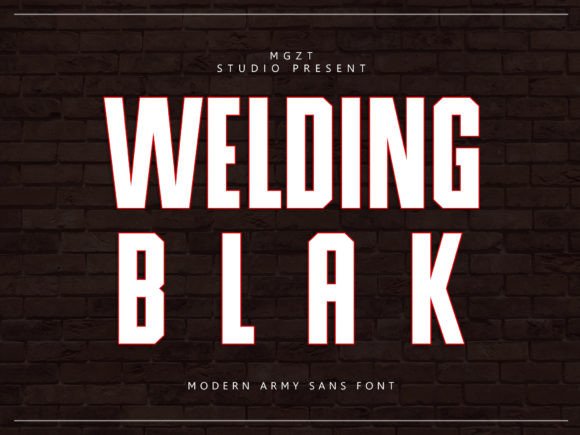
To truly appreciate the utility of Welding Blak, one must first examine its foundational design principles. At its core, the font draws heavily from the aesthetic traditions of traditional army fonts. These historical typefaces were born out of necessity, prioritizing legibility under harsh conditions and conveying an immediate sense of order and discipline. Welding Blak inherits this DNA through its bold, substantial characters. The strokes are thick and confident, creating a silhouette that demands attention and conveys strength and authority instantly.
However, where many industrial or stencil-style fonts fail by becoming too aggressive or difficult to read at smaller sizes, Welding Blak introduces a critical counterbalance: gentleness. The designer has intentionally incorporated smooth lines and nuanced curves into the letterforms. These elements soften the rigid edges typically associated with military typography, adding a human touch that prevents the text from feeling cold or impersonal. This duality creates a font that feels both protective and inviting, a rare combination in the world of display typefaces.
Visual Weight and Structural Integrity
The substantial size of the characters in Welding Blak is not merely an aesthetic choice; it is a functional asset. In environments where visibility is paramount, such as outdoor signage or large-format marketing materials, the font's weight ensures that the message remains clear from a distance. The high contrast between the thick strokes and the negative space within the letters enhances readability, even when viewed quickly or in motion. This structural integrity makes it a reliable choice for headlines that need to anchor a design layout while remaining aesthetically pleasing.
Strategic Applications in Branding and Marketing
The versatility of Welding Blak extends far beyond simple text decoration. It serves as a strategic asset for brands looking to redefine their market position. In the realm of branding, particularly for companies operating in sectors traditionally dominated by masculine imagery, this font offers a fresh perspective. It allows businesses to project power without alienating audiences who might find standard "tough" fonts off-putting.
- Rugged Branding: For outdoor gear manufacturers, automotive companies, and construction firms, Welding Blak provides the perfect visual shorthand for durability. It suggests that the product is built to last, yet the gentle curves imply that the brand cares about the user experience.
- Adventure Materials: Travel agencies and adventure tour operators can leverage the font to evoke a sense of exploration and resilience. The military inspiration hints at preparedness, while the softer elements suggest the joy and beauty of the journey.
- Strong Yet Inviting Headlines: In editorial design and web content, headlines often struggle to balance urgency with approachability. Welding Blak solves this by delivering a headline that stops the scroll but encourages the reader to continue engaging with the content.
Consider a hypothetical campaign for a new line of eco-friendly hiking boots. A standard sans-serif might feel too generic, while a jagged stencil font might feel too aggressive. Using Welding Blak, the campaign can communicate the boots' ability to withstand rough terrain (strength) while highlighting their comfort and ergonomic design (gentleness). This alignment of form and function is what makes the typeface so effective in real-world marketing scenarios.
Enhancing User Experience Through Typographic Balance
Beyond aesthetics, the choice of typeface plays a crucial role in user experience (UX) and information hierarchy. When users encounter a page, they scan for cues that tell them how to interact with the content. Fonts like Welding Blak act as powerful signposts. Because of its commanding presence, it naturally draws the eye, making it ideal for primary navigation elements, call-to-action buttons, and section headers.
The inclusion of subtle curves in the design also aids in cognitive processing. While bold fonts capture attention, overly sharp or geometric shapes can sometimes cause visual fatigue during prolonged reading sessions. The smooth transitions found in Welding Blak reduce this strain, allowing the viewer to process the information more comfortably. This is particularly important for long-form content where the header sets the tone for the body text that follows. By establishing a welcoming atmosphere immediately, the font encourages deeper engagement with the material.
Accessibility and Readability Considerations
For educators and researchers, accessibility is a non-negotiable component of design. Welding Blak's substantial character size and clear distinction between similar letters (such as 'I', 'l', and '1') make it a strong candidate for accessible design systems. Its robust nature ensures that it remains legible for individuals with visual impairments, provided it is used at appropriate sizes. However, like any display font, it should be used judiciously for body text. Its true potential lies in guiding the user through a document or interface, breaking up dense information into digestible, authoritative chunks.
Workflow Integration for Professionals and Hobbyists
Incorporating Welding Blak into a design workflow requires an understanding of how it interacts with other typographic elements. Because the font is so distinctive, it pairs best with simpler, neutral typefaces for body copy. A clean, geometric sans-serif or a classic serif can provide the necessary contrast, allowing Welding Blak to shine as the focal point without competing for attention.
For business owners and DIY creators, the implementation process is straightforward. Whether using vector-based design software or web development tools, the font's file structure supports various rendering methods. On the web, utilizing variable font technologies can allow for dynamic adjustments to weight and width, ensuring that the font adapts seamlessly to different screen sizes. This flexibility is crucial in today's multi-device environment, where a headline must look equally impressive on a billboard and a smartphone screen.
- Step 1: Define the Hierarchy. Determine which elements of your project require the most emphasis. Use Welding Blak for these key areas to establish a strong visual anchor.
- Step 2: Pair with Complementary Fonts. Select a secondary typeface that complements the boldness of Welding Blak without mimicking its style. Look for fonts with open counters and moderate x-heights.
- Step 3: Test Across Contexts. Preview the design in different lighting conditions and color schemes. The robustness of the font means it handles high-contrast backgrounds well, but testing ensures consistency.
- Step 4: Refine Spacing. Due to the substantial size of the characters, careful attention to kerning and leading is required. Tight spacing can enhance the blocky, military feel, while increased spacing can emphasize the gentle, airy aspects of the design.
Cultural Resonance and Modern Trends
The rise of Welding Blak reflects a broader trend in graphic design: the move away from binary choices. Historically, designers had to choose between "soft and friendly" or "hard and serious." Modern audiences, however, expect complexity and nuance. They want brands that are strong enough to protect them but kind enough to understand them. This cultural shift has created a demand for typefaces that embody these dual qualities.
We see this trend manifesting in various sectors. In the tech industry, hardware companies are moving away from sterile, minimalist fonts toward warmer, more tactile designs. In the lifestyle sector, wellness brands are adopting stronger, more grounded typography to signal reliability and trust. Welding Blak sits perfectly at the intersection of these movements. It speaks to a generation that values authenticity and resilience but rejects aggression and intimidation.
Observations on Longevity
While design trends come and go, the fundamental principles behind Welding Blak suggest a lasting relevance. The combination of military heritage and humanistic detail taps into timeless archetypes of protection and care. As long as there is a need to communicate strength with empathy, this typeface will remain a valuable tool in the designer's arsenal. Its ability to adapt to evolving aesthetic preferences while maintaining its core identity ensures that it will continue to be a staple in professional portfolios and consumer-facing materials alike.
Conclusion on Versatility and Impact
Ultimately, the value of Welding Blak lies in its ability to do more than just display text; it communicates a complete attitude. It tells a story of capability and compassion, of structure and flow. For professionals navigating complex brand landscapes, consumers seeking trustworthy products, and creators aiming to make a memorable impact, this font offers a solution that is both visually striking and emotionally resonant. By embracing the unique balance of robustness and gentleness, designers can create work that not only looks good but also feels right, fostering a deeper connection between the message and the audience.