Whoduck: A Modern Display Font for High-Impact Design
In the crowded landscape of digital and print media, the choice of typography often determines whether a message resonates or is overlooked. Whoduck emerges as a compelling option for designers seeking a display typeface that balances modern aesthetics with structural integrity. Unlike standard body fonts designed for long-form readability, Whoduck is engineered specifically for headlines, logos, and short bursts of text where visual impact is paramount. Its design language suggests a blend of contemporary flair and classic proportion, making it a versatile asset for professionals aiming to elevate their visual communication.
Evaluating a font like Whoduck requires looking beyond its initial appearance to understand its functional capabilities within a workflow. For marketers, entrepreneurs, and creative freelancers, the right typeface serves as a foundational element of brand identity. Whoduck offers a distinct character set that can transform a generic layout into a polished, professional presentation. Whether applied to a magazine cover, a promotional banner, or a book title, the font's inherent qualities allow it to command attention without sacrificing legibility at larger sizes.
Design Characteristics and Visual Identity
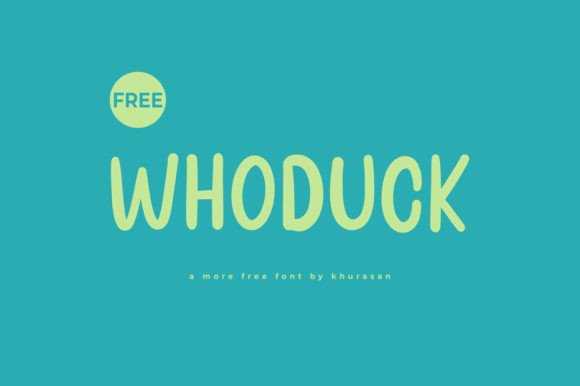
The core strength of Whoduck lies in its classification as a modern display font. This categorization implies specific design traits: bold strokes, unique terminals, and a personality that stands apart from utilitarian sans-serifs or traditional serifs. When examining the glyph construction of Whoduck, one notices a deliberate emphasis on contrast and rhythm. The letterforms are not merely shapes; they are carefully crafted elements that interact to create a cohesive visual flow.
One of the defining features of Whoduck is its "fancy" yet structured aesthetic. In typography, "fancy" can sometimes imply excessive ornamentation that detracts from clarity. However, Whoduck manages to incorporate decorative elements that enhance rather than hinder readability. The curves are smooth, and the angles are precise, suggesting a high level of attention to detail during the digitization process. This makes it particularly suitable for projects requiring a touch of elegance or sophistication, such as luxury branding, editorial design, or event invitations.
Furthermore, the font supports a wide range of stylistic variations. While specific weights may vary depending on the license package, the base structure of Whoduck allows for scaling without significant loss of definition. This scalability is crucial for designers working across multiple mediums. A logo created in Whoduck needs to look sharp on a business card just as much as it does on a billboard. The consistency of stroke width and the balance of negative space ensure that the font remains recognizable regardless of size.
Practical Applications in Professional Workflows
Understanding where Whoduck performs best is essential for maximizing its value. As a display font, its primary domain is headlines and titles. In the context of poster design, Whoduck provides an immediate focal point. The boldness of the characters draws the eye, allowing the viewer to grasp the main message instantly. This is particularly valuable in advertising campaigns where split-second decisions determine engagement rates.
For magazine editors and publishers, Whoduck offers a fresh alternative to overused headline fonts. It brings a sense of modernity to layouts that might otherwise feel dated. When used for feature stories or department headers, the font adds a layer of visual interest that complements the content without overpowering it. Similarly, in book cover design, where the title must compete with imagery and author names, Whoduck's distinct silhouette ensures the text remains prominent and memorable.
Banners and web headers also benefit from the characteristics of Whoduck. In digital environments, where users scan content rapidly, a strong typographic voice can significantly improve user retention. The font's clean lines render well on high-resolution screens, ensuring that the design intent is preserved across devices. For small business owners creating their own marketing materials, using a font like Whoduck can help establish a more professional image without the need for expensive custom lettering.
Integration with Other Design Elements
A critical aspect of evaluating any typeface is its ability to pair with other fonts and design elements. Whoduck is designed to be a statement piece, which means it works best when paired with neutral, highly readable companion fonts. A simple sans-serif or a classic serif for body text creates a harmonious hierarchy, allowing Whoduck to shine in headings while the supporting text remains accessible.
Color application is another area where Whoduck demonstrates flexibility. Because the letterforms have strong outlines and clear internal counters, they hold up well against various background colors and textures. Whether printed on textured paper or displayed on a gradient digital background, the font maintains its integrity. This versatility makes it a reliable choice for designers who frequently experiment with different palettes and material finishes.
Assessing Quality and Long-Term Value
In the world of digital assets, quality is often measured by completeness and reliability. Whoduck appears to meet the standards expected of professional-grade typefaces. The inclusion of a comprehensive character set, including standard punctuation and potentially extended Latin support, ensures that the font can handle diverse linguistic requirements. This reduces the likelihood of missing glyphs, a common frustration when working with lesser-known or free alternatives.
Usability is another factor that contributes to long-term value. A font that is difficult to install, lacks documentation, or behaves inconsistently across different software platforms can disrupt a workflow. Whoduck, being a modern release, is likely optimized for current operating systems and design applications such as Adobe Creative Cloud, Affinity Designer, and Canva. This seamless integration saves time and reduces technical friction, allowing creators to focus on the design itself rather than troubleshooting compatibility issues.
From an investment perspective, acquiring a high-quality display font like Whoduck can yield returns through consistent brand application. Once integrated into a brand's style guide, the font becomes a recognizable part of the company's visual identity. Over time, this consistency builds brand equity. Unlike trends that fade quickly, a well-designed typeface has the potential to remain relevant for years, provided it is used thoughtfully and appropriately.
Ideal Audience and Project Fit
While Whoduck is versatile, it is not a universal solution for every design challenge. It is most beneficial for professionals and hobbyists who require a font with personality and presence. Entrepreneurs launching new products, marketers running seasonal campaigns, and bloggers seeking to refresh their site headers will find particular value in this typeface. The font's ability to stand out makes it ideal for projects where differentiation is key.
However, there are limitations to consider. Due to its display nature, Whoduck is not suitable for large blocks of body text. Attempting to use it for paragraphs or articles would likely result in poor readability and visual fatigue. Designers must exercise restraint and reserve Whoduck for its intended purpose: headlines, logos, and short phrases. Understanding this boundary is crucial for maintaining the professionalism of the final output.
Additionally, the "modern and fancy" description suggests a specific aesthetic that may not align with all brand voices. Companies aiming for a strictly minimalist, industrial, or ultra-traditional look might find Whoduck too expressive. It is important to evaluate whether the font's character matches the tone of the project before committing to it. Context matters, and the right font in the wrong setting can undermine the entire design effort.
Strategic Recommendations for Implementation
To get the most out of Whoduck, designers should approach its implementation with intentionality. Start by testing the font at various sizes to determine the optimal weight and spacing for your specific medium. Adjusting kerning and tracking can significantly enhance the visual impact, especially in tight layouts like logos or narrow banners. Experimenting with different case combinations—such as all caps versus title case—can also reveal new possibilities for expression.
When incorporating Whoduck into a broader design system, ensure that it complements existing brand elements rather than clashing with them. If the brand already utilizes a strong geometric font, Whoduck might offer a necessary contrast. Conversely, if the brand is already highly ornate, a simpler pairing might be required to maintain balance. Always review the final design in both print proofs and digital previews to catch any rendering issues before publication.
Ultimately, Whoduck represents a practical tool for elevating visual communication. Its combination of modern styling, structural reliability, and broad applicability makes it a worthy addition to any designer's toolkit. By understanding its strengths and limitations, professionals can leverage Whoduck to create designs that not only look good but also effectively communicate their intended message. In a field where details define success, choosing the right typography is a decision that pays dividends in clarity, engagement, and brand perception.