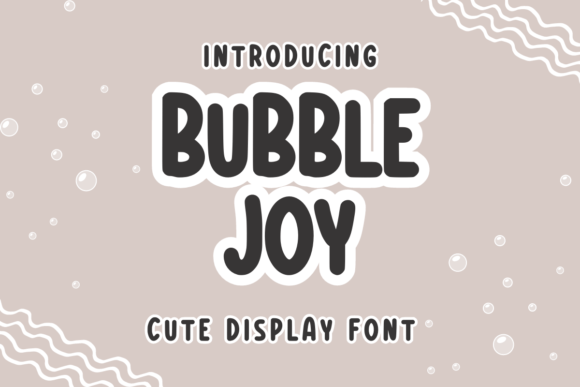
Bubble Joy: The Playful Typography Revolutionizing Digital and Print Design
In the vast landscape of digital typography, where sleek sans-serifs and rigid serifs often dominate professional interfaces, there exists a niche for fonts that breathe life, whimsy, and immediate emotional connection into a project. Bubble Joy stands as a prime example of this category. It is not merely a typeface; it is a visual language designed to communicate friendliness, approachability, and creativity. As designers, educators, and business owners seek to humanize their brands in an increasingly automated world, understanding the unique characteristics and applications of Bubble Joy becomes essential for creating content that resonates on a deeper level.
The Anatomy of Whimsy: Defining the Bubble Joy Aesthetic
To appreciate the utility of Bubble Joy, one must first understand its structural DNA. Unlike standard display fonts that might rely on sharp angles or historical ornamentation, Bubble Joy draws inspiration from the organic shapes found in nature—specifically, the fluidity of soap bubbles and soft clouds. The letterforms are characterized by rounded terminals, varying stroke widths that mimic hand-drawn imperfections, and a distinct lack of harsh edges. This "cute and adorable" quality is not accidental; it is the result of deliberate design choices intended to lower the viewer's psychological guard.
When analyzing the font through a technical lens, several key features emerge. The x-height is generally generous, ensuring legibility even at smaller sizes, which is a common pitfall for many decorative fonts. The spacing, or kerning, is optimized to allow the round shapes to sit comfortably next to one another without appearing cramped or disjointed. Furthermore, the curvature of the letters creates a sense of forward momentum, making text feel dynamic rather than static. These attributes make Bubble Joy a wonderful asset to any font library, offering a specific tonal voice that standard typefaces simply cannot replicate.
Psychological Impact on the Viewer
The effectiveness of Bubble Joy extends beyond mere aesthetics; it taps into established principles of color psychology and shape perception. In design theory, rounded shapes are universally associated with safety, comfort, and playfulness. When a user encounters text set in Bubble Joy, the brain processes these curves as non-threatening and inviting. This makes the font particularly powerful for industries that need to build trust quickly or appeal to younger demographics. Whether it is a children's educational app, a boutique toy store website, or a wellness blog focusing on self-care, the font acts as a visual cue that signals, "You are welcome here."
Conversely, the font can also be used strategically to disrupt expectations. Placing Bubble Joy within a stark, minimalist corporate layout can create a moment of surprise and delight, drawing the eye immediately to a call-to-action or a special announcement. This contrast technique highlights the versatility of the typeface, proving that its "adorable" nature does not limit it to childish contexts but rather allows it to serve as a sophisticated tool for emotional engagement.
Strategic Applications Across Diverse Industries
The true measure of a font's value lies in its adaptability across various real-world scenarios. While Bubble Joy is inherently playful, its application ranges from high-end marketing campaigns to grassroots community projects. Understanding where and how to deploy this typeface can significantly elevate the impact of a creative project.
Educational Resources and Child-Centric Content
For educators and publishers, readability and engagement are paramount. Traditional serif fonts can sometimes appear intimidating to early readers. Bubble Joy offers a solution by presenting letters in a friendly, almost tactile format. Its rounded forms closely resemble the way children naturally write when they are learning to form letters. Consequently, using this font in worksheets, storybooks, and educational software can reduce anxiety and increase motivation. The font transforms the act of reading from a chore into an exploration, aligning perfectly with modern pedagogical approaches that emphasize positive reinforcement and joyful learning.
Brand Identity and Marketing Campaigns
In the competitive realm of consumer goods, brand identity is everything. Companies selling products related to lifestyle, food, beverages, or personal care often struggle to differentiate themselves in a saturated market. Bubble Joy provides a distinctive signature that can become synonymous with a brand's personality. Imagine a logo for a new line of organic baby food or a social media campaign for a summer festival; the use of this font instantly communicates warmth and authenticity. It suggests that the brand cares about its customers and values fun over formality. For small business owners, adopting such a font can be a cost-effective way to establish a memorable visual presence without the need for complex graphic elements.
Digital Interfaces and User Experience (UX)
As web design evolves, the focus has shifted from pure functionality to experiential design. Users spend hours interacting with screens, and the typography plays a crucial role in setting the mood of an interface. Bubble Joy is increasingly being utilized in mobile apps, particularly those focused on gaming, social networking, or hobbyist communities. In these environments, the font helps to soften the digital experience, making interactions feel more conversational and less transactional. However, UX designers must exercise caution; while excellent for headlines and buttons, the font should generally be reserved for short bursts of text to maintain clarity and prevent visual fatigue.
Navigating the Nuances: Best Practices for Implementation
While Bubble Joy offers immense creative potential, like any specialized tool, it requires thoughtful implementation to avoid common pitfalls. The transition from a generic font to a character-driven display typeface involves specific considerations regarding hierarchy, pairing, and context.
Hierarchy and Scale: One of the most effective ways to utilize Bubble Joy is to leverage its natural weight. Because the strokes are thick and rounded, the font commands attention even at moderate sizes. Designers should use it primarily for headings, subheadings, and pull quotes. Attempting to set long paragraphs in Bubble Joy can lead to readability issues, as the irregular shapes may cause the eye to stumble during extended reading sessions. Instead, pair it with a clean, neutral sans-serif for body copy to create a balanced visual rhythm.
Color and Contrast: The bubbly nature of the font pairs exceptionally well with vibrant, saturated colors. Pastels, bright primaries, and gradients enhance the playful aesthetic. However, high-contrast combinations, such as white text on a deep navy background, can also work effectively to ground the whimsy and add a touch of sophistication. The key is to ensure that the color choice supports the message rather than overwhelming the delicate curves of the letterforms.
Contextual Appropriateness: Not every message benefits from a cheerful tone. It is vital to assess the emotional weight of the content before applying Bubble Joy. Serious news, financial reports, or legal documents would be ill-served by this typeface, potentially undermining the credibility of the information. The font thrives in contexts where joy, creativity, and connection are the primary goals. By respecting these boundaries, creators can ensure that the font enhances the message rather than distracting from it.
The Future of Expressive Typography
The rise of fonts like Bubble Joy reflects a broader shift in design culture. We are moving away from the sterile uniformity of the early internet era toward a more expressive, human-centric approach. Audiences today crave authenticity and personality in their digital interactions. They want to feel connected to the brands and creators they engage with. In this landscape, a cute and adorable display font is no longer seen as a novelty but as a strategic asset.
As technology advances, we can expect to see even more dynamic applications of such typefaces. Variable fonts, animated text, and interactive typography will likely integrate the core principles of Bubble Joy—fluidity, roundness, and charm—into new mediums. From augmented reality experiences to immersive storytelling platforms, the demand for typography that evokes emotion will only grow. Creators who master the art of balancing function with feeling will be the ones who stand out in the future marketplace.
Building a Robust Font Library
For professionals and hobbyists alike, curating a diverse font library is a critical skill. Relying solely on system defaults limits creative expression. Including a versatile display font like Bubble Joy ensures that you have the right tool for projects requiring a softer touch. It expands your toolkit, allowing you to tackle a wider range of briefs with confidence. Whether you are designing a wedding invitation, a classroom poster, or a startup logo, having access to such a unique typeface empowers you to craft narratives that are both visually stunning and emotionally resonant.
Ultimately, the decision to use Bubble Joy is a decision to prioritize the human element in design. It acknowledges that communication is not just about transferring data but about sharing feelings and building relationships. In a world filled with noise and complexity, the simple, joyful curve of a bubble-shaped letter can cut through the clutter, delivering a message of warmth and possibility. As you explore the possibilities of your own creative endeavors, consider how integrating this delightful typeface might transform your work, turning ordinary projects into extraordinary experiences.