Cashup: A Strategic Approach to Bubble Typography in Branding
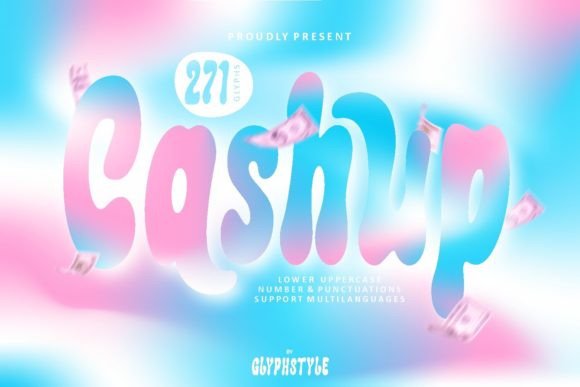
In the crowded landscape of visual communication, the choice of typeface is rarely just an aesthetic preference; it is a strategic decision that signals tone, intent, and brand personality. Cashup, a distinct bubble-shaped display font characterized by its smooth curves and rounded forms, offers more than just a playful look. When deployed with intention, Cashup becomes a powerful tool for creating memorable identities, softening corporate messaging, and guiding user attention in high-stakes marketing environments. However, like any specialized design asset, its value is entirely dependent on context. Using Cashup without a clear strategic framework can dilute a brand's authority, while using it correctly can elevate a project from generic to distinctive.
The Strategic Value of Curved Typography
Typography psychology suggests that shapes influence how audiences perceive information. Sharp angles often convey urgency, precision, or aggression, whereas rounded forms suggest approachability, safety, and friendliness. Cashup leverages this psychological principle through its signature bubble structure. The smooth curves inherent in the Cashup design create a visual rhythm that is easy for the eye to follow, reducing cognitive load and inviting engagement.
For entrepreneurs and marketers targeting demographics that value community, wellness, or creativity, Cashup serves as a non-verbal cue of inclusivity. It strips away the intimidation factor often associated with rigid, geometric sans-serifs. In branding projects, this translates to a lower barrier to entry for potential customers. When a logo utilizes Cashup, it immediately communicates that the business is accessible and human-centric. This is not merely about looking "cute"; it is about aligning the visual identity with the desired customer experience. If your goal is to build trust through warmth rather than authority through rigidity, Cashup provides the necessary structural foundation.
Aligning Font Choice with Business Goals
Before integrating Cashup into a workflow, decision-makers must evaluate whether the font supports their specific operational goals. For a financial consultancy aiming to project unshakeable stability, Cashup might be counterproductive. Conversely, for a startup in the lifestyle, education, or creative sectors, the font acts as a differentiator. The strategic utility of Cashup lies in its ability to disrupt expectations in industries dominated by sterile, minimalist typography.
Consider the application in product packaging. In a retail environment where consumers make split-second decisions, the shape of the text on a label can dictate shelf presence. Cashup’s bold, inflated letterforms stand out against flat backgrounds and intricate patterns alike. This visibility is crucial for small business owners competing for attention. By choosing Cashup, you are making a calculated move to capture the eye and hold it longer than standard fonts would allow. The font transforms static text into a graphical element, effectively serving dual purposes as both information carrier and decorative asset.
Optimizing Use Cases for Maximum Impact
The versatility of Cashup extends across various mediums, but its effectiveness varies based on the platform and the message. Understanding these nuances allows creators to maximize the return on their design efforts.
- Logo Design: Cashup excels in logos for brands that prioritize connection and fun. Its rounded edges prevent the logo from feeling harsh, making it ideal for children's products, boutique cafes, or social enterprises. The challenge here is scalability; ensure the bubbles remain legible when shrunk down for favicons or mobile app icons.
- Social Media Graphics: In the fast-scrolling environment of social media, headlines need to stop the thumb. Cashup creates a natural focal point. When used for event announcements, flash sales, or inspirational quotes, the font adds a layer of excitement and immediacy. It signals that the content is engaging and worth pausing for.
- Wedding and Event Stationery: Invitations set the tone for the entire event. Cashup brings a sense of celebration and joy to wedding designs, bridal showers, and birthday parties. It replaces the formality of traditional scripts with a modern, bubbly elegance that feels fresh and contemporary.
- Photography Watermarks: Photographers often struggle with watermarks that obscure the image or clash with the composition. Because Cashup has a solid, filled shape, it can be rendered in white or black with high contrast, ensuring visibility without becoming an eyesore. Its organic shape blends better with natural photography subjects than blocky fonts do.
Navigating Risks and Limitations
Despite its strengths, relying on Cashup without critical analysis carries significant risks. The primary danger lies in overuse or misapplication. A bubble font can easily tip the scale from "friendly" to "childish" if the surrounding design elements do not provide enough maturity to balance it. For professional services, legal firms, or luxury goods, the use of Cashup may inadvertently undermine credibility, suggesting a lack of seriousness or expertise.
Furthermore, readability is a persistent concern with display fonts. While Cashup is beautiful, its thick strokes and enclosed counters (the holes inside letters like 'o', 'e', and 'a') can become indistinct at small sizes or low resolutions. Using Cashup for body copy in advertisements or long-form web content is a strategic error that will harm user experience and SEO performance due to poor readability. It should strictly remain a display font, reserved for headlines, short phrases, and graphical accents.
Another risk involves brand consistency. If Cashup is introduced into a brand system without a clear hierarchy, it can conflict with existing typographic choices. Decision-makers must establish strict guidelines: define exactly where Cashup appears, what size it should be, and which colors pair best with it. Without these guardrails, the brand identity becomes fragmented, confusing the audience about what the company actually stands for.
Planning for Long-Term Brand Equity
Successful implementation of Cashup requires a forward-thinking approach. Trends in design shift rapidly, and bubble fonts have cycled in and out of popularity over the decades. To ensure longevity, the use of Cashup must be grounded in core brand values rather than fleeting trends. Ask yourself: Does this font reflect who we are five years from now? If the answer is yes, then the investment in customizing and integrating the font is justified.
To achieve this, treat Cashup as a component of a broader visual strategy. Pair it with a highly legible, neutral sans-serif for body text to create a balanced ecosystem. This combination allows the brand to speak with a friendly voice (via Cashup) while maintaining clarity and professionalism (via the secondary font). This duality is essential for building long-term trust. It shows that the brand understands the importance of both emotion and function.
Additionally, consider the technical execution. When designing labels or packaging, test the font across different materials. The glossy finish of a product box might interact differently with the curves of Cashup compared to matte paper. Prototyping is not optional; it is a necessary step to ensure the font renders correctly in production. Poor execution can ruin the effect of even the most well-chosen typeface, leading to a perception of low quality.
Decision-Making Framework for Implementation
Before finalizing a design project involving Cashup, run it through a simple strategic filter:
- Define the Objective: Are you trying to evoke joy, signal simplicity, or highlight a special offer? If the goal is authority or data density, reject Cashup immediately.
- Analyze the Audience: Will your target demographic interpret the bubbles as welcoming or immature? Conduct quick focus groups or surveys if there is doubt.
- Check the Context: Where will this appear? Is it a large billboard, a tiny Instagram story, or a printed invoice? Ensure the font size and weight are appropriate for the medium.
- Test for Legibility: Print the design at actual size. Can the text be read instantly? If the curves merge or the counters close up, adjust the spacing or choose a different variant.
- Ensure Consistency: Does this usage align with the rest of the brand's visual language? If it clashes with the color palette or other fonts, reconsider the pairing.
By applying this framework, professionals can move beyond random selection and towards intentional design. Cashup is a robust tool in the designer's arsenal, capable of transforming ordinary projects into standout experiences. Whether for product labels that demand attention on a crowded shelf or wedding invitations that promise a joyful celebration, the font delivers when guided by clear purpose.
Ultimately, the power of Cashup lies not in the font file itself, but in the strategy behind its deployment. It is a choice that speaks to a desire for connection, creativity, and visual impact. When used with discipline and foresight, it strengthens brand positioning and enhances communication. However, when used without thought, it risks trivializing the message. The difference between success and failure is the planning phase—the moment where the decision-maker pauses to ask not just "does this look good?" but "does this work for our goals?" Answering that question honestly ensures that Cashup serves the brand, rather than the brand serving the trend.