Darling Coffee: A Versatile Display Font for Modern Branding
In the crowded landscape of digital and print design, the choice of typography often dictates the immediate emotional response of an audience. Darling Coffee has emerged as a distinct option for designers seeking a balance between whimsy and professionalism. As a modern display font, it is engineered to capture attention without sacrificing legibility in specific contexts. Its aesthetic leans heavily into the "cute" and approachable category, making it a compelling asset for brands that wish to project warmth, creativity, and a touch of nostalgia. For professionals ranging from freelance graphic designers to marketing directors, understanding the practical application of Darling Coffee is essential for determining its fit within a broader visual identity strategy.
Defining the Aesthetic and Structural Characteristics
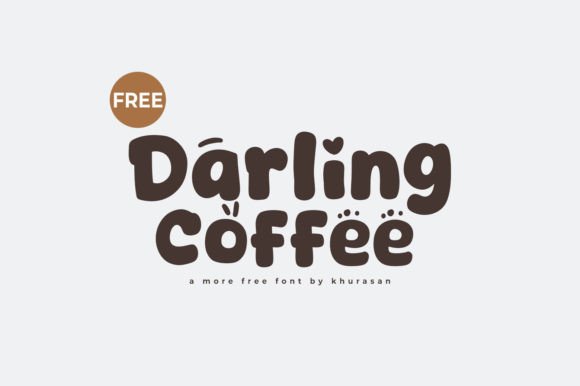
The core appeal of Darling Coffee lies in its structural composition. Unlike rigid sans-serif fonts or traditional serif typefaces that prioritize neutrality, Darling Coffee incorporates rounded edges, varying stroke widths, and playful ligatures. These characteristics create a handcrafted feel, reminiscent of chalkboard signage found in independent cafes or the lettering on artisanal packaging. The font's weight distribution is generally balanced, preventing the letters from appearing too heavy or insubstantial, which is a common pitfall in novelty typefaces.
From a technical standpoint, the font offers a range of glyphs that support creative flexibility. While it is primarily a display font, meaning it is intended for use at larger sizes, the clarity of its character forms allows it to remain readable down to a moderate size. This versatility is crucial for projects where the text serves both a decorative and informational purpose. The curves are smooth, avoiding the jagged artifacts that can sometimes plague lower-quality custom fonts, ensuring that the design remains crisp across various rendering engines and printing presses.
Practical Applications in Commercial Design
The utility of Darling Coffee extends beyond simple decoration; it serves as a functional tool for specific commercial objectives. Its primary strength is evident in poster design, where large headlines need to convey a mood instantly. For event promotions, such as art fairs, community gatherings, or product launches, the font acts as a visual hook. It signals to the viewer that the content is friendly, accessible, and likely related to lifestyle, food, or creative industries.
Logos represent another significant area of application. Small business owners, particularly those in the coffee shop, bakery, or boutique retail sectors, often struggle to find a logo font that feels unique yet established. Darling Coffee provides a solution by offering a distinctive silhouette that stands out against competitors using standard geometric fonts. When used for book covers, especially in genres like young adult fiction, romance, or self-help, the typeface adds a layer of personality that generic fonts cannot replicate. Similarly, in magazine layouts, it functions effectively as a pull-quote style or section header, breaking up dense blocks of body text with visual interest.
Banners and Digital Assets
In the realm of digital marketing, banners and social media graphics require high impact within seconds. Darling Coffee performs well here due to its bold presence. On a mobile screen, where space is limited, the font's rounded forms render clearly without losing definition. Marketers can leverage this quality to create call-to-action buttons or promotional overlays that feel organic rather than corporate. The ability to pair Darling Coffee with a clean, neutral secondary font ensures that the overall composition remains balanced, preventing the design from becoming visually chaotic.
Evaluating Usability and Workflow Integration
For a font to be truly valuable, it must integrate seamlessly into existing design workflows. Darling Coffee is compatible with major design software suites, including Adobe Illustrator, Photoshop, InDesign, and Canva. This compatibility reduces friction for professionals who rely on these tools daily. The file structure is typically robust, supporting standard encoding that prevents missing character errors during text entry. This reliability is a critical factor for agencies managing tight deadlines, as font glitches can cause significant delays in production.
Usability also extends to the ease of pairing. One of the strengths of Darling Coffee is its adaptability when combined with other typefaces. It pairs exceptionally well with simple sans-serifs like Helvetica or Roboto, allowing the display font to take center stage while the body text remains highly legible. Designers do not need to spend excessive time searching for complementary fonts, as the contrast between the playful display and the neutral body creates a natural hierarchy. This efficiency makes it a practical addition to a designer's library, saving time on the decision-making process.
Quality, Consistency, and Long-Term Value
When assessing the long-term value of a typographic asset, consistency is paramount. Darling Coffee maintains a consistent voice across different weights and styles, assuming the full family is utilized. The kerning and spacing are generally well-calibrated, reducing the need for manual adjustment in most headline scenarios. However, as with any display font, careful attention to tracking is necessary when the font is used at very small sizes or in condensed formats. Professional designers should test the font in the final output medium before committing to a full layout to ensure that the intricate details do not disappear.
The quality of the vector paths ensures that the font scales without degradation. Whether a client requires a tiny icon for a mobile app or a massive billboard for a highway, Darling Coffee retains its integrity. This scalability contributes to its longevity as a resource. Unlike trend-driven fonts that may look dated after a single season, the classic "hand-lettered" style of Darling Coffee taps into a timeless aesthetic that transcends fleeting design fads. This makes it a safer investment for brands looking to establish a lasting identity.
Ideal Audience and Situational Fit
Darling Coffee is not a universal solution for every design challenge. Its specific tonal qualities make it ideal for certain audiences and situations while potentially unsuitable for others. It is best suited for adults aged 20 to 50 who are involved in creative industries, entrepreneurship, or lifestyle branding. Entrepreneurs launching a new product line in the wellness, food, or fashion sectors will find the font aligns well with their brand values of authenticity and care.
Freelancers and bloggers who focus on personal storytelling or niche hobbies can utilize Darling Coffee to inject personality into their headers and titles. Educators creating materials for younger students or community workshops may also benefit from its approachable nature. However, for industries requiring strict formality, such as law, finance, or medical services, Darling Coffee may appear too informal. In these contexts, the font could undermine the authority and seriousness required by the subject matter. Therefore, the decision to use Darling Coffee should be driven by the desired emotional connection with the target demographic.
Limitations and Strategic Considerations
While Darling Coffee offers numerous advantages, it is important to acknowledge its limitations. As a display font, it is not designed for long-form body copy. Using it for paragraphs of text can lead to eye strain and reduced readability. Designers must adhere to the principle of using it sparingly for emphasis. Additionally, the font's playful nature means it relies heavily on context; without appropriate imagery and color schemes, it may appear juvenile rather than sophisticated. Successful implementation requires a holistic design approach where the font is supported by complementary visual elements.
Furthermore, the uniqueness of Darling Coffee means that overuse can dilute its impact. If a market becomes saturated with similar "cute" fonts, the distinctiveness of Darling Coffee may diminish. To maintain effectiveness, designers should consider how they can manipulate the font—through color gradients, textures, or layout innovations—to keep the presentation fresh. Understanding these constraints allows professionals to maximize the font's potential while avoiding common pitfalls associated with novelty typefaces.
Final Assessment for Creative Professionals
Darling Coffee represents a thoughtful addition to the toolkit of modern designers. It bridges the gap between professional utility and artistic expression, offering a reliable way to communicate warmth and creativity. Its performance in real-world applications, from posters to logos, demonstrates a clear value proposition for those targeting lifestyle-oriented audiences. By understanding its structural strengths, workflow compatibility, and situational appropriateness, professionals can leverage Darling Coffee to create designs that stand out. Ultimately, the font's success depends on the designer's ability to match its inherent personality with the strategic goals of the project, ensuring that the final result is both aesthetically pleasing and functionally effective.