Little Baby Sweet: A Practical Evaluation of a Playful Cartoon Typeface
When selecting typography for projects targeting younger audiences or aiming to evoke nostalgia, the choice of font often dictates the emotional resonance of the final design. Little Baby Sweet, created by Unitype Studio Font, has emerged as a significant option in the category of cartoon-style typefaces. Unlike generic "fun" fonts that rely on simple geometric rounding, this typeface attempts to replicate the organic, hand-drawn quality found in classic animation and children's literature. For designers, marketers, and content creators aged 20 to 50 who are evaluating resources for branding, publishing, or digital media, understanding the specific utility and limitations of Little Baby Sweet is essential before integrating it into a workflow.
Defining the Aesthetic: What Makes Little Baby Sweet Distinct
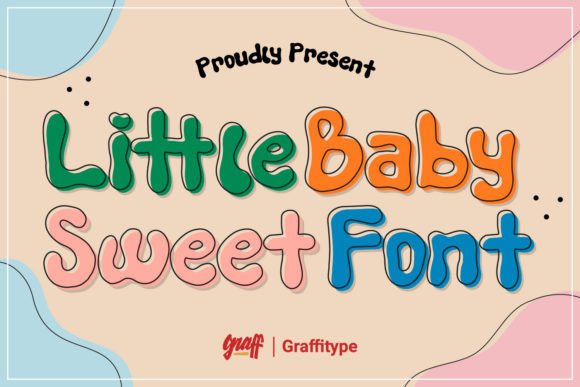
The primary differentiator of Little Baby Sweet lies in its structural composition. While many playful fonts utilize uniform stroke widths and perfect circles to maintain legibility, this font embraces irregularity. The characters feature exaggerated curves, joyful swirls, and lively lines that mimic the natural variance of a human hand holding a marker or pencil. This "bouncy" quality is not merely decorative; it serves a functional purpose in conveying energy and approachability.
In the context of typographic classification, Little Baby Sweet sits at the intersection of display scripts and informal sans-serifs. It avoids the rigid symmetry of standard geometric fonts, opting instead for a dynamic style where each letter feels slightly unique. This craftsmanship captures the essence of classic cartoons, making it particularly effective for projects requiring an immediate sense of whimsy. The inclusion of uppercase, lowercase, numbers, punctuation, and special characters ensures that the font can handle more than just headlines, allowing for body text in short-form content without breaking the visual theme.
Comparative Analysis: How It Stacks Against Alternatives
To make an informed decision, it is necessary to compare Little Baby Sweet with other common approaches in the playful typography market. Generally, cartoon fonts fall into two camps: those that prioritize strict legibility through simplified shapes, and those that prioritize character through complex detailing. Little Baby Sweet leans heavily toward the latter.
- Against Geometric Playful Fonts: Many standard "bubble" fonts offer high readability but lack personality. They often appear flat and digitally manufactured. In contrast, Little Baby Sweet introduces texture and movement, making it superior for projects where emotional engagement is more critical than rapid information processing.
- Against Hand-Drawn Script Fonts: True handwritten scripts can sometimes suffer from inconsistent spacing and poor legibility at smaller sizes. Little Baby Sweet mitigates this by maintaining a structured baseline while retaining the hand-drawn feel. It offers a middle ground, providing the charm of a script with the stability of a constructed typeface.
- Against Generic Free Options: Free alternatives often lack a complete character set or fail to render well across different platforms. Little Baby Sweet provides a high-resolution format compatible with major design software, ensuring consistency whether the output is a digital video title or a printed invitation.
However, this distinctiveness comes with tradeoffs. The intricate details that define the font may become muddy if scaled too small or used in low-resolution environments. Designers must weigh the aesthetic benefits against potential technical constraints when choosing between this font and simpler alternatives.
Strengths and Tradeoffs in Professional Application
The strengths of Little Baby Sweet are most evident in specific use cases where personality drives the message. Its vibrant and dynamic style ensures that text captures attention quickly, making it ideal for logos, posters, comic strips, and festive invitations. The font's ability to infuse text with a burst of personality allows brands to soften their image, appearing more accessible and friendly to families and children.
Yet, every tool has limitations. The primary tradeoff with Little Baby Sweet is versatility in formal contexts. Because the design is so distinctly "cartoonish," it can undermine credibility if used inappropriately. For instance, using this font for a financial report or a medical brochure would likely create cognitive dissonance, confusing the audience about the nature of the content. Furthermore, the bouncy nature of the characters can affect line spacing (leading) and kerning. When setting large blocks of text, the irregular shapes may require manual adjustment to prevent letters from colliding or creating uneven white space.
Another consideration is the resolution dependency. While the font is described as crisp and clear at any size, the fine swirls and exaggerated curves rely on vector precision. If a designer exports a project for web use without proper optimization, these delicate features might pixelate, losing the intended charm. Therefore, while the font is high-resolution, the user's export settings play a crucial role in maintaining its quality.
Determining the Right Fit: When to Choose or Avoid
Deciding whether Little Baby Sweet is the right resource depends largely on the project's goals and the target demographic. This font is the optimal choice when the objective is to evoke joy, nostalgia, or childlike wonder. It excels in scenarios such as:
- Children's Publishing: Storybooks, educational materials, and activity sheets benefit from the font's inviting appearance, which encourages reading and interaction.
- Event Branding: Birthday parties, school events, and family-oriented festivals require a visual identity that signals fun and celebration.
- Animated Content: Video titles, YouTube thumbnails, and motion graphics align perfectly with the font's lively lines, enhancing the kinetic energy of the medium.
- Lifestyle Branding: Brands selling toys, baby products, or casual apparel can use this font to establish a warm, approachable brand voice.
Conversely, there are situations where readers should look for another option. If the project demands high-density information, such as legal disclaimers or instructional manuals, the decorative elements of Little Baby Sweet will hinder readability. Similarly, for luxury brands or corporate entities seeking a minimalist or serious tone, this font is likely a mismatch. In these cases, a cleaner sans-serif or a more subtle serif would serve the communication goals better.
Practical Implementation and Technical Considerations
For those who decide that Little Baby Sweet fits their creative vision, ease of use is a significant factor. The font is designed to be compatible with all major design software, including industry standards like Adobe Illustrator, Photoshop, and InDesign. This compatibility reduces the barrier to entry, allowing designers to integrate the typeface into existing workflows without technical friction. The inclusion of easy-to-follow installation instructions further streamlines the process, ensuring that users can begin experimenting immediately.
However, successful implementation requires attention to detail. Due to the font's unique character shapes, designers should pay close attention to color contrast and background complexity. Placing Little Baby Sweet over a busy pattern may obscure the intricate swirls and curves. A solid or subtly textured background often yields the best results, allowing the font's personality to shine without visual competition. Additionally, because the font includes a complete character set, users have the flexibility to mix styles within a single document, though maintaining consistency in weight and scale remains important for professional polish.
Conclusion: Balancing Creativity with Functionality
Little Baby Sweet represents a specialized tool within the broader landscape of digital typography. It is not a universal solution for all design needs, but rather a targeted resource for projects that require a specific emotional tone. By offering a blend of hand-drawn charm and digital reliability, it bridges the gap between amateur aesthetics and professional execution. For adults comparing options for playful projects, the decision ultimately rests on balancing the desire for whimsy with the practical requirements of legibility and context. When used in the right environment—children's books, animated content, or festive branding—it delivers an irresistible charm that can elevate a design from ordinary to memorable. However, careful evaluation of the project scope is necessary to ensure that the font's distinctive style enhances rather than detracts from the overall message.