Sinosuke: A Balanced Evaluation of a Modern Japanese-Inspired Display Font
In the crowded landscape of digital typography, finding a typeface that balances aesthetic novelty with functional readability is often a challenge for designers. Sinosuke emerges as a distinct option in this space, offering a modern interpretation of Japanese lettering styles tailored for Western and global design projects. Unlike traditional serif or sans-serif fonts that dominate corporate communications, Sinosuke belongs to the display category, specifically engineered to command attention through its structural complexity and cultural visual cues. For professionals aged 20 to 50 who are curating brand identities, designing editorial layouts, or creating marketing assets, understanding where Sinosuke fits within a broader typographic strategy is essential.
This evaluation explores the characteristics of Sinosuke, compares it against similar stylistic alternatives, and outlines specific scenarios where it excels or falls short. The goal is to provide a clear framework for deciding whether this font aligns with your specific project requirements without relying on hyperbolic marketing claims.
The Distinctive Character of Sinosuke
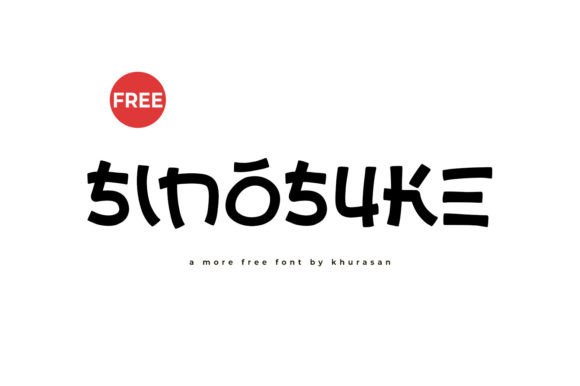
Sinosuke is defined by its hybrid nature. It mimics the stroke weight, angularity, and rhythm of traditional Japanese calligraphy but simplifies these elements to ensure legibility across various media. The font features high contrast between thick and thin strokes, sharp terminals, and a slightly condensed structure that gives it a vertical emphasis. These traits make it visually striking, particularly when used in large sizes.
What sets Sinosuke apart from generic "Asian-style" fonts is its attention to modern geometric principles. While many fonts in this niche rely on exaggerated curves or decorative flourishes that can appear dated, Sinosuke maintains a clean, contemporary edge. The letterforms are constructed with precision, allowing them to scale effectively from small app icons to massive outdoor banners. This versatility is a key factor for designers looking to maintain a cohesive visual identity across different touchpoints.
However, the very features that make Sinosuke unique also dictate its limitations. Because it is a display font, it is not intended for extended body text. Using it for paragraphs in a magazine article or a website blog post would likely result in poor readability and visual fatigue. Its strength lies in brevity—titles, headlines, logos, and short phrases where impact is prioritized over information density.
Comparing Sinosuke to Alternative Styles
When evaluating Sinosuke, it is helpful to compare it against other categories of display typography. Designers often oscillate between three main approaches when seeking an exotic or culturally inspired look: authentic script simulations, geometric sans-serifs with Asian influences, and decorative brush styles.
- Authentic Script Simulations: These fonts attempt to replicate actual handwriting or calligraphy. While they offer high authenticity, they often lack consistency in spacing and alignment, making them difficult to use in professional logo design. Sinosuke offers a more structured alternative, providing the "hand-crafted" feel with the reliability of a vector-based grid.
- Geometric Sans-Serifs: Clean, modern sans-serifs are excellent for readability but often lack personality. If a project requires a neutral tone, a standard geometric font is superior. However, if the goal is to evoke a sense of culture, energy, or artistic flair, Sinosuke provides a level of character that geometric fonts cannot match.
- Decorative Brush Styles: Many fonts mimic ink brushes with splatters and irregular edges. While effective for certain rustic or organic themes, they can clash with sleek, modern branding. Sinosuke strikes a middle ground; it suggests the brush stroke without the messiness, making it suitable for both high-end fashion magazines and tech startups looking for an edgy vibe.
In terms of file formats and technical performance, Sinosuke typically follows standard web-font protocols (WOFF2, TTF), ensuring compatibility with major design software like Adobe Illustrator, Photoshop, and InDesign. This technical parity means there are no significant barriers to adoption compared to proprietary or niche font libraries.
Strengths and Tradeoffs in Practical Application
Adopting Sinosuke into a design workflow offers several tangible benefits, primarily centered around differentiation. In a market saturated with minimalist Helvetica and Arial derivatives, Sinosuke allows brands to stand out immediately. Its distinctive silhouette creates a strong visual hook, which is crucial for posters, book covers, and event banners where seconds count to capture attention.
Key Strengths:
- High Impact: The bold strokes and unique shapes ensure visibility even at a distance.
- Versatility in Pairing: Sinosuke pairs exceptionally well with simple, neutral sans-serif fonts. This combination allows the display font to take center stage while maintaining overall layout balance.
- Cultural Resonance: It evokes a sense of sophistication and Eastern aesthetics without requiring the audience to read Japanese characters.
Potential Tradeoffs:
- Limited Readability: As noted, it is unsuitable for long-form text. Attempting to use it for captions or body copy will degrade the user experience.
- Context Sensitivity: The style may not fit every industry. For example, a conservative financial institution or a medical practice might find the font too aggressive or informal.
- Licensing Considerations: Like many premium display fonts, users must verify licensing terms regarding commercial use, especially for logos that will be trademarked.
Decision Factors: When to Choose Sinosuke
Determining whether Sinosuke is the right choice depends heavily on the project's goals and target audience. If the objective is to create a memorable logo for a creative agency, a lifestyle brand, or a cultural festival, Sinosuke is a strong contender. Its ability to convey "modern" and "fancy" simultaneously makes it ideal for industries such as fashion, gastronomy, entertainment, and luxury goods.
Consider a scenario where you are designing a poster for a jazz fusion concert. You need a title that feels energetic yet refined. A standard serif font might feel too academic, while a graffiti-style font might feel too chaotic. Sinosuke bridges this gap, offering a rhythmic quality that complements the musical theme while maintaining a polished appearance.
Conversely, if your project involves educational materials, legal documents, or user interface elements requiring dense information, Sinosuke should be avoided. In these contexts, clarity and neutrality are paramount. The tradeoff here is clear: sacrificing some legibility for stylistic flair is only acceptable when the design's primary function is attraction rather than information delivery.
Strategic Implementation in Design Projects
To maximize the effectiveness of Sinosuke, designers should employ it strategically within a broader typographic system. The most successful applications involve using Sinosuke as an accent or headline font, paired with a highly readable secondary font for supporting text. This approach leverages the strengths of both typefaces: the visual punch of Sinosuke and the utility of a standard sans-serif.
For instance, on a magazine cover, Sinosuke could be used for the main feature story title, drawing the eye immediately. The subheadings and table of contents could then utilize a clean, light-weight sans-serif to guide the reader through the content. This hierarchy ensures that the design remains engaging without becoming overwhelming.
Furthermore, consider the medium. On digital screens, Sinosuke's crisp lines render well on high-resolution displays, but care must be taken with smaller screen sizes where fine details might blur. Testing the font at various resolutions is a necessary step before finalizing any digital campaign. For print applications, such as banners and book covers, the font performs robustly, provided the paper stock and printing method support high-contrast ink application.
Conclusion: Weighing the Value
Sinosuke represents a compelling option for designers seeking to inject personality and cultural depth into their work. It is not a universal solution, nor is it intended to replace core utility fonts. Instead, it serves as a specialized tool for moments that require visual distinction. By understanding its strengths in headline design and its limitations in body text, professionals can integrate Sinosuke into their toolkit effectively.
Ultimately, the decision to use Sinosuke should be driven by the specific needs of the project. If the goal is to create a standout visual identity that resonates with a modern, style-conscious audience, Sinosuke offers a viable path forward. However, if the priority is strict informational clarity or adherence to conservative branding guidelines, other options may serve better. Evaluating these factors ensures that the chosen typography enhances the message rather than distracting from it.